
 Sale
SaleTile Ideas
Combining tile designs in the hallway
Aug
As the entrance to your home, the hallway is the first area guests will encounter. As such, it’s important that this space sets the tone for the rest of the interior. At the same time, it also needs to be able to withstand heavy footfall, and be waterproof and easy to clean. That’s why tiles are such a popular choice for this space. Combining tile designs in the hallway is also a popular option, but what does this involve? And which tile combinations can be effective here?
Why should you consider combining tile designs in the hallway?
Hallways are often long, narrow, and prone to wear and tear. This means that if just one type of tile is used, the space may appear flat or uninspiring. In contrast, mixing tiles introduces visual interest and can even make the hallway feel larger, brighter, or more cohesive with adjoining rooms. Combining designs also allows for practical benefits, like using hard wearing tiles in high traffic zones and softer tones or textures for decorative impact.

What are the effective options when combining tile designs in the hallway?
To make sure you achieve the right results when combining tile designs, there are a number of different factors to consider. Design harmony and cohesion is one of the most important of these. While the tiles should differ enough to create contrast, they still need to share an underlying connection. This can be through colour palette, finish, or material effect. Some combinations that work particularly well include:
- Timber effect and stone effect tiles- Wood effect tiles bring warmth and texture, while stone effect tiles add an organic, earthy feel. When combined, they create a natural and balanced aesthetic, ideal for rustic or transitional spaces. For instance, timber look tiles along the main walkway paired with stone effect borders can create a sophisticated contrast that feels both inviting and practical. It’s best to stick to neutral or complementary tones to avoid visual clashes.
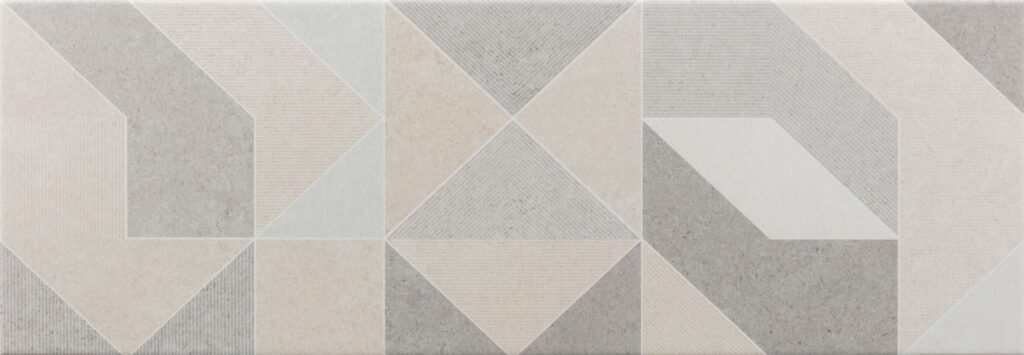
- Patterned and plain tiles- This is a classic combination that works well in both traditional and contemporary settings. Patterned tiles can serve as a focal point, while plain tiles provide a calming backdrop. This pairing is especially popular for Victorian-style hallways, where encaustic-inspired patterns on the floor are bordered by simple tiles. If you opt for bold patterns, you should be sure to choose plain tiles in a shade that appears within the pattern to create visual continuity.
- Gloss and matt finishes- Combining glossy and matt finishes can add depth and dimension without introducing too many colours or patterns. Gloss tiles reflect light, making the space feel brighter, while matt tiles provide texture and reduce slipperiness. You should use gloss in areas you want to highlight, such as borders or smaller sections, and keep matt tiles for the main floor area for practicality.
- Large and small format tiles- Pairing large-format tiles with smaller mosaics or decorative inserts can create a luxurious, customised look. This approach works particularly well in spacious hallways or where you want to define specific zones without erecting physical barriers. Be sure to keep grout lines consistent in colour to avoid a busy, fragmented appearance.

What are the different design styles you can achieve?
Your tile choices will influence the overall design style of your hallway. Here are some common aesthetics and how to achieve them through tile combinations:
- Contemporary- For a modern look, consider large-format tiles in neutral tones, paired with subtle textural differences rather than bold patterns. A combination of stone-effect tiles and sleek gloss finishes can create a sophisticated, streamlined effect. Minimalism is key here, so avoid overly intricate designs.
- Rustic- Rustic hallways benefit from natural textures and warm tones. Timber effect tiles combined with earthy stone effect tiles offer an authentic, countryside inspired look.
- Traditional- Victorian or Edwardian-style hallways often feature patterned tiles in geometric motifs, combined with plain tiles or borders. This style works best in period properties but can also add a touch of heritage charm to modern homes. Monochrome combinations, such as black and white, are timeless choices here.

What are the design mistakes to avoid when mixing tiles?
While combining tiles can elevate your hallway, some common mistakes can undermine the result. Here are the most common mistakes to steer clear of:
- Overcomplicating the design- Using too many different tiles can make the hallway feel chaotic. As a rule of thumb, you should limit yourself to two or three tile styles that share a unifying element, such as colour, material effect, or finish.
- Ignoring proportions and scale- Small-format tiles can look fussy in a large hallway, while oversized tiles may overwhelm a narrow space. Always consider the dimensions of your hallway and choose tile sizes that are proportionate.
- Clashing colours and patterns- Bold patterns combined with strong colours can create visual overload. If your patterned tile is intricate, keep the accompanying tiles simple and neutral. Conversely, if you choose a vibrant colour scheme, stick to plain tiles for balance.
Here at Tiles 2 Go, we are Preston’s leading tiling professionals. We help homeowners and property developers make the right tiling choices, day after day. Why not take a look at our range of tiles online or in store today, here at Tiles 2 Go?