
 Sale
SaleTile Ideas
What are the effective tiling options for narrow bathrooms?

Sep
If you have a narrow bathroom, you might be wondering what type of tiling to choose, to make the best possible visual impact. Tiles are not only a very practical option for bathrooms, due to their naturally waterproof nature, they are also a good way to complement the overall style and design of the space. The right tiles can transform a small, awkwardly shaped room into something that feels bright, stylish, and more spacious. So what are the effective tiling options for narrow bathrooms? And what should you consider before making your choice?
What are the effective tiling options for narrow bathrooms?
There are a number of effective tiling options for narrow bathrooms. These include:
- Large format tiles
- Subway tiles
- Mosaic tiles
- Patterned tiles
- Diagonal layouts
Each of these approaches can help enhance your space in different ways, depending on the overall look you’d like to achieve.
Large format tiles for narrow bathrooms
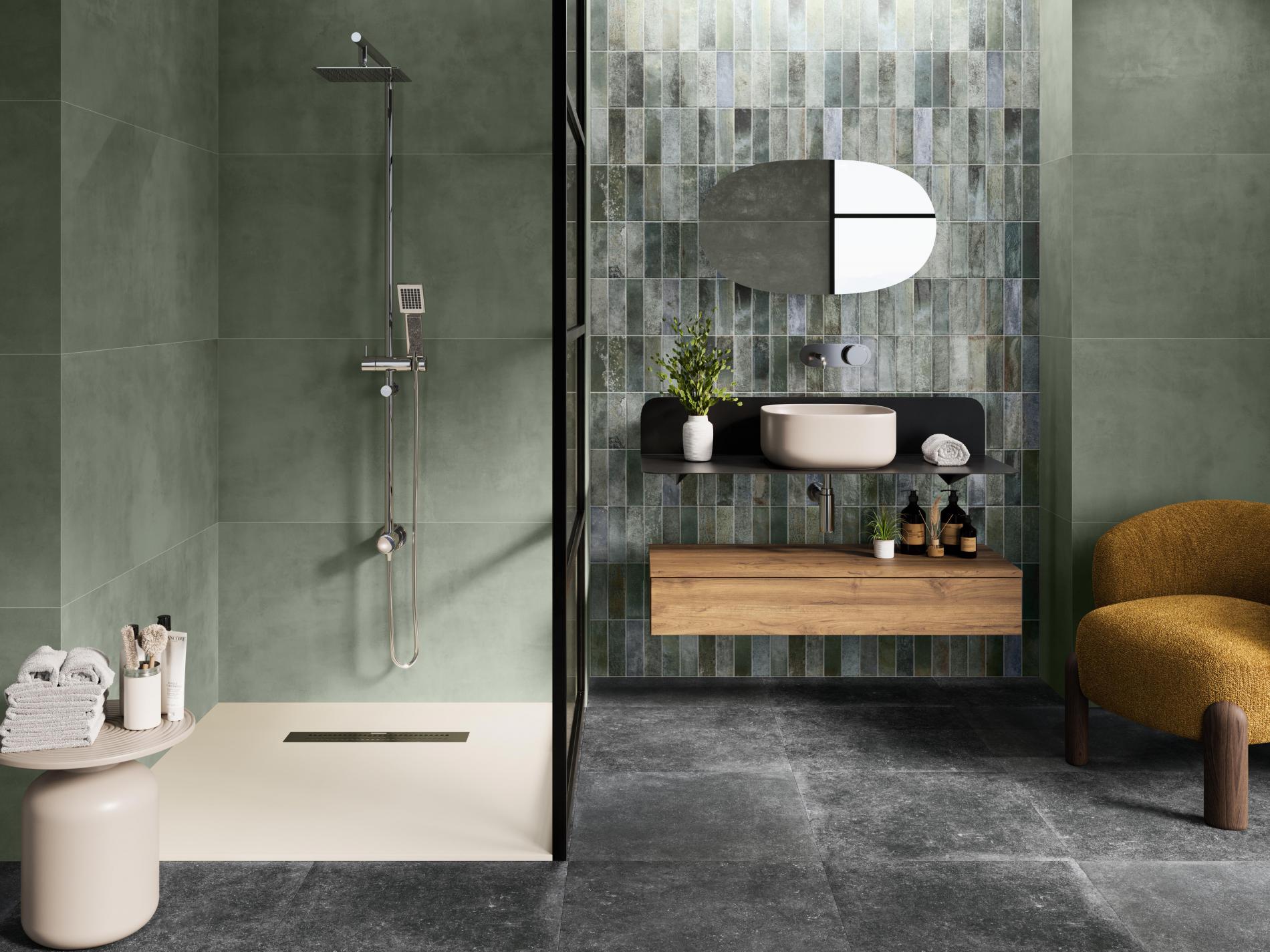
If you’re looking for a way to make your narrow bathroom feel larger, large format tiles can be the perfect choice. These are tiles that are larger than standard, up to 600×600 mm or even larger. The benefit of these for narrow bathroom spaces is that they reduce the number of grout lines. Fewer grout lines mean less visual interruption, creating a more seamless and continuous look that draws the eye and makes the room appear more expansive.
Large format tiles are effective on both floors and walls. For a modern, spa-inspired feel, you could use a light, matte finish tile on the walls and a slightly textured version on the floor. Lighter shades such as soft grey, beige, or off-white can reflect natural and artificial light beautifully, further enhancing the sense of openness.

Subway tiling options for narrow bathrooms
Another effective option for narrow bathrooms is to use subway tiles. These classic rectangular tiles are incredibly versatile and can be installed in a wide range of patterns. A horizontal brick-bond layout can help to draw the eye across the room, visually widening the space. For a sleek, contemporary effect, you might consider a stacked horizontal layout, which creates clean, straight lines.
On the other hand, if you’re feeling more adventurous, you could experiment with a herringbone layout. Although slightly busier in appearance, this can add visual interest and a sense of movement that helps to distract from the narrow proportions of the room. Again, light-coloured subway tiles with a glossy finish will reflect light and add depth to the space.
Mosaic tiles for narrow bathrooms
If you’re looking to add a feature to your narrow bathroom, mosaic tiling can be a great choice. Traditionally associated with decorative borders and intricate patterns, mosaic tiles are now available in a huge range of contemporary designs, from geometric shapes to shimmering metallic finishes.
Mosaics are particularly effective when used as an accent rather than covering an entire wall. A vertical mosaic strip behind the sink, for example, can add height and create a striking focal point without overwhelming the space. Similarly, a mosaic-tiled shower niche can introduce both function and flair. Because mosaics are made up of small pieces, they can also be used to cover curved or awkward surfaces that larger tiles may struggle with.

Patterned tiles to add character
While plain tiles are often used to open up narrow bathrooms, patterned tiles can also play an important role. Choosing a bold patterned tile for the floor, while keeping the walls neutral, can help anchor the space and give it a sense of personality without feeling cluttered.
For example, a monochrome geometric design can add sophistication and style, while Moroccan-inspired patterns can bring warmth and vibrancy. When paired with simple wall tiles, patterned floors can make a narrow bathroom feel carefully designed rather than simply functional.
Using diagonal or vertical layouts
Sometimes it’s not just the type of tile that matters, but the way you lay them. Diagonal tiling is a clever trick that can make a floor appear wider, as the angle naturally disrupts the long, straight lines of a narrow room. Similarly, placing rectangular wall tiles vertically can help draw the eye upwards, emphasising height and creating the illusion of a taller space.
These small layout changes can make a big difference, especially in bathrooms where space is at a premium.

Colour, finish and grout considerations
Beyond size, shape and pattern, the colour and finish of your tiles can also transform a narrow bathroom. Glossy finishes tend to reflect light, helping to brighten the space, while matt finishes can add a calm, sophisticated feel.
When it comes to grout, choosing a shade that matches your tiles will reduce visual breaks and enhance the sense of flow. Conversely, contrasting grout can add definition and style, but it may also emphasise the room’s narrow proportions, so it’s worth considering carefully.
Choose Tiles 2 Go for your bathroom tiles
With the right tiling choices, you can create a narrow bathroom space that feels both stylish and more spacious. Large format tiles, subway tiles, and mosaics each offer their own advantages, while patterned and diagonal layouts can introduce interest and individuality. The key is to think about the overall effect you want to achieve, from clean and contemporary to bold and characterful, and choose tiles that enhance rather than overwhelm your bathroom.
Why not take a look at our full range of wall and floor tiles today, here at Tiles 2 Go? With so many designs, finishes and sizes available, you’re sure to find the perfect option to transform your narrow bathroom into a space you’ll love.