
 Sale
SaleTile Ideas
What are the most effective tiling combinations?

May
Choosing the right tiles can completely transform a space. Whether you’re renovating your bathroom, revamping a kitchen, or reimagining a hallway floor, the way tiles are combined in terms of colour, texture, size, and shape can make all the difference. It’s not just about picking a style you like, it’s about understanding how these elements work together to complement or contrast, or even to create a statement. But what are the most effective tiling combinations? And what should you consider when choosing tiling combinations for your property?
So what are the most effective tiling combinations?
Tiles can be combined in a wide range of different ways to create a variety of visual and aesthetic effects. These include:
- Choosing colour combinations
- Choosing texture combinations
- Choosing size combinations
- Choosing shape combinations

What are the effective tile colour combinations?
When it comes to tile colours, balance is key. You want something that complements the space but doesn’t overwhelm it. Why not consider:
- Neutral with a twist- Combining neutral tiles (think white, beige, or grey) with a splash of colour can add interest without being overpowering. For example, pairing classic white metro tiles with a line of navy or forest green tiles can give a timeless look with a modern edge. This works well in both kitchens and bathrooms and gives you the flexibility to change up accessories later on.
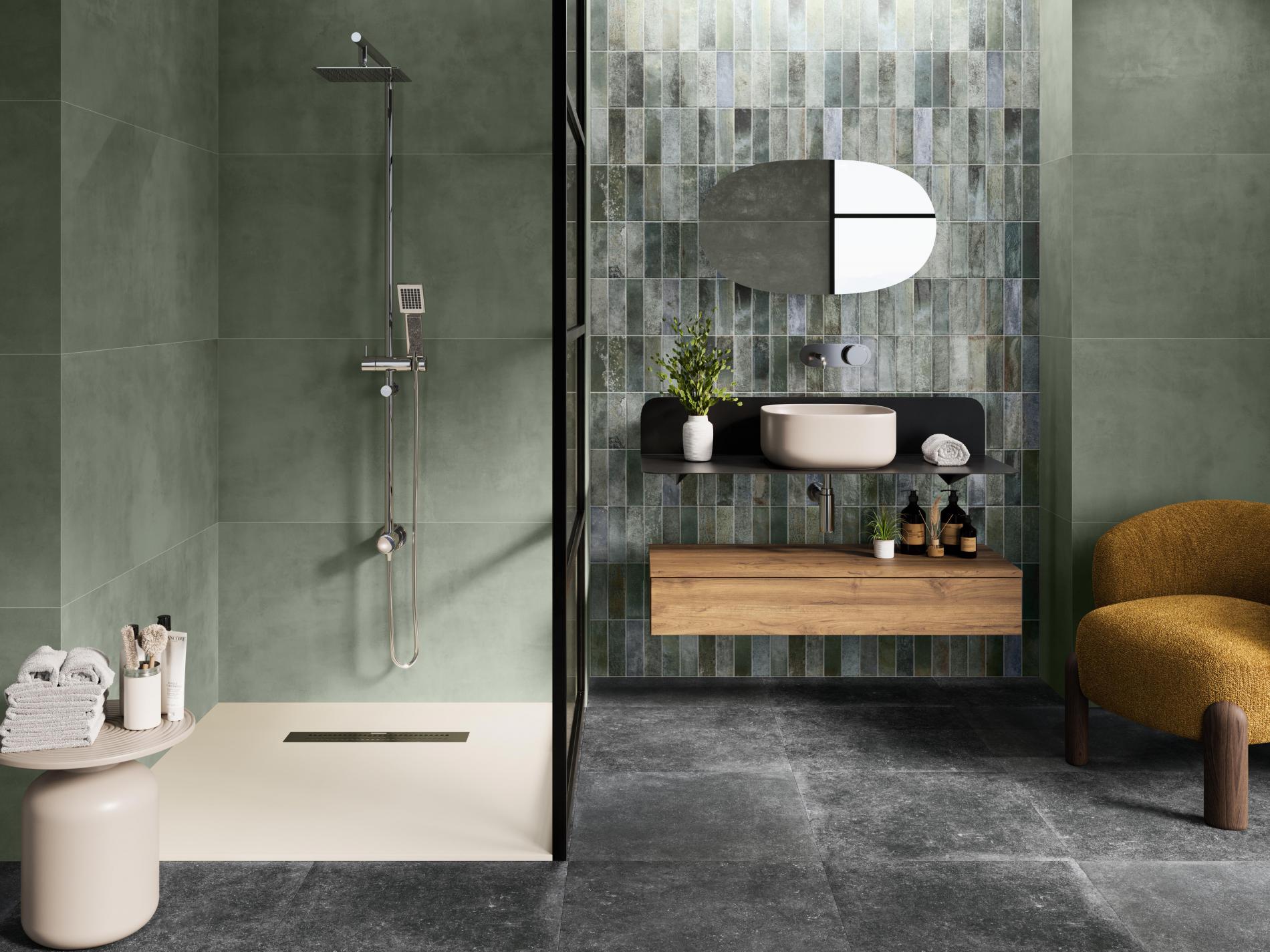
- Dark and moody- Deep tones like charcoal, bottle green, and midnight blue are becoming increasingly popular, especially in bathrooms. Pairing dark tiles with brass or gold fittings can feel really luxurious. To avoid the space feeling too closed in, combine darker tiles with lighter grout or add a feature wall in a lighter shade to create contrast.
- Combining tones- Using different shades of the same colour family can create a soft, cohesive look. For instance, combining pale sage green with darker olive tiles gives a layered, natural feel. It’s subtle but effective, especially in relaxed spaces like en-suite bathrooms or utility rooms.
- Patterned meets plain- A popular combo is to use patterned tiles on the floor with plain tiles on the wall (or vice versa). This helps avoid visual overload but still allows for personality.
What are the effective texture pairings for different tiles?
Because this is a more subtle effect, texture can often be overlooked when choosing your tiles, but it can make a big impact. Some effective options include:
- Combining glossy and matte tiles- One effective approach is to mix glossy and matte tiles in the same or complementary colours. Glossy tiles reflect light, making small spaces feel brighter and bigger. Matte tiles, on the other hand, offer a soft, contemporary look. Using matte tiles on the floor with glossy wall tiles, for example, adds depth and subtle contrast without clashing.
- Natural finishes- Stone-effect tiles, like slate or limestone, bring in a natural, slightly rustic feel. Combining these with smoother ceramic or porcelain tiles can create an appealing contrast. For example, a slate look floor tile combined with smooth white or soft pastel wall tiles balances rough and refined.
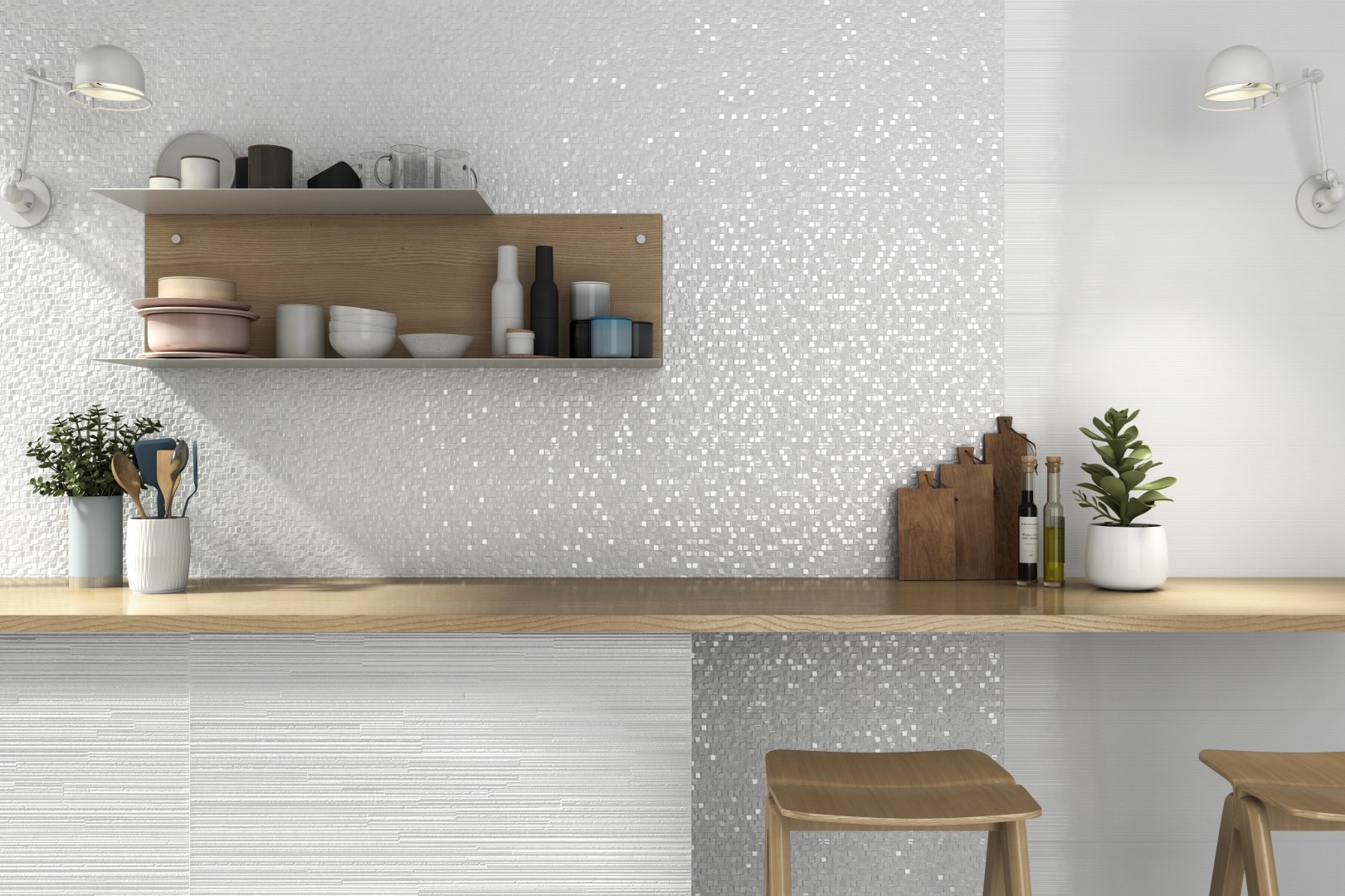
- Textured feature walls- Some tiles have a raised or 3D texture that can be used to create a feature wall. This is particularly effective in showers or behind a bath. This adds interest without needing bold colour or pattern. Just be careful not to overuse it; a single feature wall or strip is usually enough.

What are the effective tile size combinations?
Tile size affects both the feel of the space and the practicality of fitting. Mixing sizes thoughtfully can add flow and visual interest, so why not consider:
- Large tiles for small spaces- You might think small tiles suit small rooms, but large-format tiles can actually make a compact space feel bigger because there are fewer grout lines breaking up the space. Large tiles on the floor with smaller wall tiles (or vice versa) can create a clear sense of proportion.
- Mixing mosaics with larger tiles- Mosaic tiles are tiny, often square tiles, and these can be great for feature sections like niches, splashbacks, or around mirrors. Pairing them with larger tiles keeps things grounded. A common and effective combination is large white wall tiles with a mosaic border in a complementary colour.
- Modular layouts- Some tile ranges are designed to be mixed and matched. These are called modular or multi-size systems. They allow you to combine tiles of different sizes (like a mix of 600x600mm, 600x300mm and 300x300mm) in a set pattern. This works brilliantly for floors, creating a traditional or country-style feel, especially in hallways or kitchens with flagstone style tiles.
What are the effective tile shape combinations?
Tile shapes have come a long way from just squares and rectangles. Now you can find hexagons, scallops, diamonds and more, and combining shapes cleverly makes a statement. Why not consider:
- Metro tiles with a twist- Classic metro or subway tiles (usually rectangular) can be laid in several patterns including brick bond, vertical stack, herringbone, or basketweave. Changing the layout can dramatically change the look, even if the tiles are plain white. For a modern spin, try vertical stacking or a diagonal herringbone.
- Hexagons- Hexagon tiles are incredibly versatile. They can be used on floors or walls and look great when blended with standard rectangular tiles. For example, you might have a bathroom floor that starts as hexagons near the doorway and gradually blends into rectangular tiles in the shower.
- Scallop and fan tiles- These fish-scale or fan-shaped tiles are gaining popularity, especially in bathrooms and kitchens. Use them as a feature wall or splashback and pair with simpler shapes elsewhere to let them shine. Soft pastel colours or glossy finishes work well with these curvy designs.
- Combining geometric shapes- If you’re feeling bold, mixing shapes like diamonds with rectangles can create dynamic, eye catching patterns. Just keep the colour palette restrained so the shapes stand out without clashing.
For more information or advice, get in touch with the team today, here at Tiles 2 Go. We are Preston’s leading tiling professionals. From kitchens and bathrooms, to hallways and living rooms, we have a range of tiles to suit any home, and any style.